



CYP1A2 Inhibitor
-
VU6001966
 0 Images
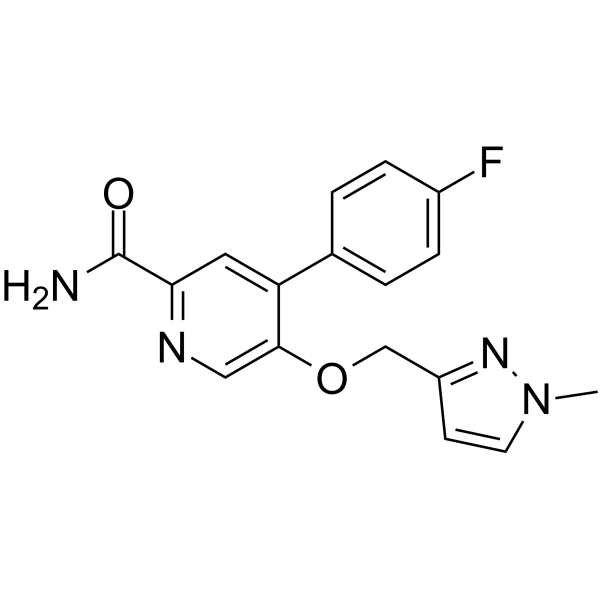
VU6001966 is a brain-penetrant and selective mGlu2 receptor inhibitor. VU6001966 blocks mGlu2 receptor activity, counteracts LY379268 (HY-103558)-mediated blood-brain barrier protection and inflammatory cytokine dampening in microglia under inflammatory conditions. VU6001966 enhances antidepressant effects when combined with Scopolamine (HY-N0296). VU6001966 can be used for the research of major depressive disorder.
-
Utreloxastat
 0 ImagesSynonyms: PTC857
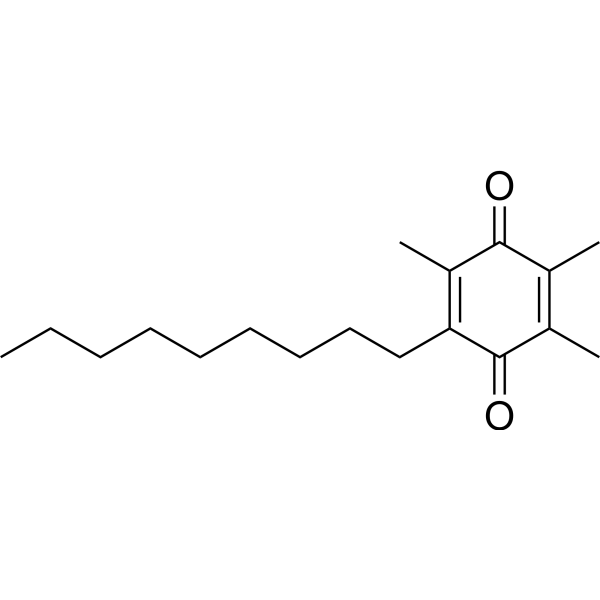
Utreloxastat (PTC857) is an orally active and blood-brain barrier-permeable 15-lipooxygenase inhibitor. Utreloxastat is a weak inhibitor of CYP1A2 and 2B6 with an IC50 of >5.3 μM. Utreloxastat reduces oxidative stress and inhibits the consumption of reduced glutathione and ferroptosis. Utreloxastat can be used in the study of neurodegenerative diseases characterized by high levels of oxidative stress and mitochondrial pathology, such as amyotrophic lateral sclerosisc.
-
Marmesinin
 0 Images
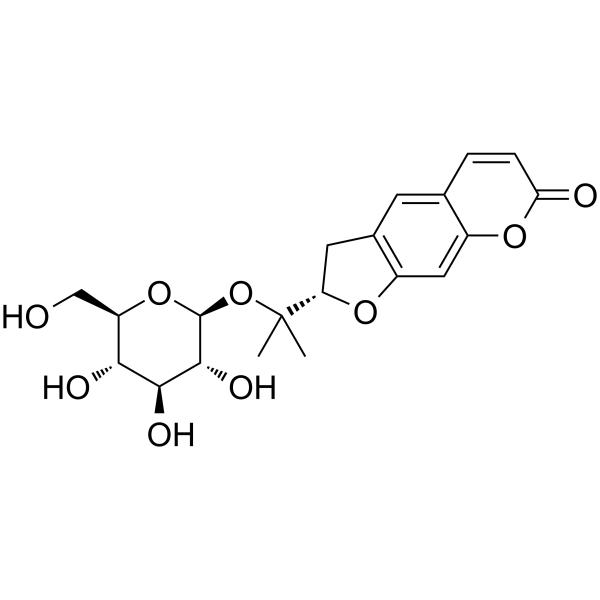
Marmesinin ((-)-Marmesinin; Ammijin) is an orally active furanocoumarin glycoside that enhances insulin secretion by inhibiting CYP1A2/CYP3A4 and Aldose Reductase, and modulating the PPARγ/PDX-1/IRS-2 pathway, while also exhibiting anti-inflammatory, antioxidant, and myocardial membrane-stabilizing effects. Marmesinin is used in research on type 2 diabetes, diabetic complications, myocardial injury, neurodegenerative diseases, and malaria.
-
FGFRs-IN-1
 0 ImagesCat. No.: HY-170846
FGFRs-IN-1 (Compound A16) is the orally active inhibitor for FGFR, that inhibits FGFR1/2/3/4 with IC50s of 2.3, 7, 11, and 163 nM, respectively. FGFRs-IN-1 also inhibits VEGFR1/2/3, Abl, and Flt3 with IC50s of 61, 176, 112, 26, and 353 nM, respectively. FGFRs-IN-1 exhibits weak inhibitory efficacy against CYP enzymes. FGFRs-IN-1 reduces the expression of α-SMA and collagen I, and inhibits epithelial-mesenchymal transition (EMT) in TGF-β1 stimulated A549 cell. FGFRs-IN-1 exhibits anti-inflammatory activity in Bleomycin (HY-17565)-induced mouse pulmonary fibrosis model and CCl4 (HY-Y0298)-induced mouse liver fibrosis model.
-
BMS-223131
 0 ImagesCat. No.: HY-19397CAS No.: 275375-69-4
BMS-223131 (Compound 1) is a potent maxi-K potassium channel opener. BMS-223131 has a strong inhibitory effect on the CYP2C9 enzyme (IC50 = 1.7 μM) and also shows varying degrees of inhibition on other common CYP enzymes such as CYP1A2, CYP2C19, CYP2D6, and CYP3A4. BMS-223131 can enhance the outward current mediated by maxi-K, by promoting K+ efflux to hyperpolarize the cell membrane and reducing Ca2+ influx. BMS-223131 can be used for the research of neurological disease, such as stroke.
-
NNRT-IN-10
 0 ImagesCat. No.: HY-174417CAS No.: 2459751-62-1
NNRT-IN-10 is a potent, selective and orally active non-nucleoside HIV-1 reverse transcriptase (NNRTI) inhibitor with with an EC50 values ranging from 1.16 to 18.3 nM for HIV and its mutant strains. NNRT-IN-10 exhibits good pharmacokinetic properties and favorable safety profiles. NNRT-IN-10 can be used for the study of AIDS, caused by HIV-1.
-
meso-Zeaxanthin
 0 ImagesCat. No.: HY-167632CAS No.: 31272-50-1Synonyms: (3R,3′S)-Zeaxanthin
meso-Zeaxanthin ((3R,3′S)-Zeaxanthin) is an orally active xanthophyll carotenoid. meso-Zeaxanthin inhibits CYP1A1, CYP1A2, CYP2B1/2, COX-2, TNF-α and iNOS, and enhances the activities of Uridine diphosphate glucuronosyltransferase and Glutathione-S-transferase. meso-Zeaxanthin quenches oxygen free radicals. meso-Zeaxanthin filters short-wavelength blue light, alleviates oxidative damage and visual abnormalities. meso-Zeaxanthin reduces tumor incidence, prolongs tumor latency and survival rate of tumor-bearing mice, and inhibits paw edema. meso-Zeaxanthin can be used in research related to sarcoma and age-related macular degeneration.



